How Integrated Solar Plants Enable Southeastern Europe's Next Phase of Renewable Energy Growth
From rapid capacity growth to long-term performance certainty, Romania and Greece show how integrated utility-scale solutions are turning ambitious renewable targets into resilient, bankable energy infrastructure.
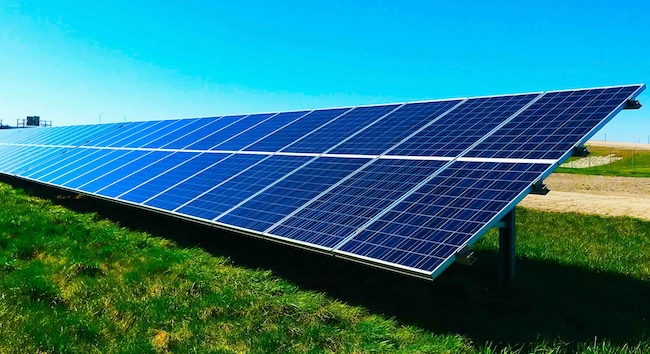
Nobody can deny Europe’s energy transition is advancing at a remarkable pace. In 2025, renewable sources accounted for more than 44 percent of electricity generation across the EU, with solar representing the fastest-growing segment in the energy mix. Solar capacity alone increased by over 62 GW between 2024 and 2025, marking the strongest annual growth on record. This momentum is particularly evident in southeastern Europe, where countries such as Romania and Greece are emerging as key growth markets.
Both countries have set ambitious national targets aligned with the EU’s Fit for 55 framework. Based on its National Energy and Climate Plan, Greece aims to reach over 70 percent renewable electricity generation by 2030, while Romania plans to more than double its installed solar capacity within the next five years. Driven by rising energy demand, grid modernization efforts, and the strategic objective of reducing dependence on energy imports, the region has positioned itself at the forefront of utility-scale renewable deployment.
To support the rapid expansion in Southeastern Europe amid emerging challenges, a deeper transformation is necessary in the energy sector to not only scale capacity, but also rethink how energy infrastructure is designed, built, and operated.
As southeastern Europe continues to expand its renewable energy footprint, strong collaboration between technology providers, developers, EPCs, and policymakers will be essential.
From Capacity Expansion to Performance Certainty
As renewable energy deployment accelerates across southeastern Europe, the focus of the market is shifting. While installed capacity remains an important benchmark, developers, investors, and policymakers are increasingly prioritizing performance certainty over the full asset lifecycle. Grid constraints, curtailment risk, volatile weather patterns, and rising financing costs are placing greater emphasis on predictable energy yields and operational transparency, including real-time insights into plant operations, system health, and long-term performance behavior.
In this context, the ability to manage risk upfront has become a competitive differentiator pushing the industry toward integrated system design. This starts by replacing conventional fixed-tilt systems with an integrated solar plant that combines solar tracking intelligence to unlock more energy, robust structural engineering, automated controls, and site-specific design and installation adaptation. This allows projects to be optimized for maximum output and built for long-term reliability under real-world conditions.
Overcoming Challenges with Integrated Solutions
Despite impressive progress, significant challenges remain. Climate variability is becoming a critical consideration for project developers. Across southern and southeastern Europe, extreme weather events – including heatwaves, high winds, and heavy rainfall – are occurring with increasing frequency. Each of these conditions affects photovoltaic performance in different ways. Prolonged heatwaves, for instance, can accelerate module degradation and reduce output, with degradation rates reaching up to 0.8 percent per year in the hottest areas of Europe.
In addition, much of southeastern Europe is characterized by complex topographies, ranging from mountainous regions to uneven and geotechnically demanding terrain. These conditions increase engineering requirements and can complicate installation timelines and long-term operations if systems are not designed for site-specific adaptability.
Integrated solar plants offer solutions to address these challenges that go beyond the technical aspects and also involve logistical and financial innovation.
By combining flexible foundations, tracker systems, software, and engineering expertise into a single, coherent offering, developers can mitigate risk, optimize performance, and significantly reduce overall project complexity.
Integrated systems enable more accurate energy modelling, faster deployment, fewer installation and logistics risks, and improved operational resilience – factors that are increasingly scrutinized by investors and lenders.
Essential Support for Radical Modernisation
As projects scale up and site conditions become more demanding, fragmentation across multiple suppliers increasingly becomes a risk factor. Developers are therefore looking for integrated solutions that reduce interfaces, enhance predictability, and strengthen bankability over the full lifecycle of an asset.
At Nextpower, we have actively embraced this shift. Building on our heritage in advanced solar tracking, we have evolved into a provider of fully integrated utility-scale solutions for modern solar plants.
To address the growing complexity of scaling solar power, we have significantly expanded our portfolio. Today, we deliver a comprehensive range of solutions, including foundations, module mounting systems, eBOS, remote monitoring, and intelligent software platforms. These components are delivered as integrated, end-to-end systems designed to simplify project execution and improve long-term performance.
With our expanded capabilities and clear focus on integrated utility-scale solutions, we see ourselves as a long-term strategic partner for the region. By supporting innovation, addressing local challenges, and enabling reliable, high-performance solar assets, we aim to contribute to the next phase of the energy transition – one defined not only by speed – including the ability to shorten project lead times through localized supply chain strategies and regional manufacturing partnerships that we have successfully established across Europe.
For capital-intensive utility-scale solar projects in this region, integrated solar systems enable more accurate forecasting, stronger bankability, and improved resilience against external shocks. In practical terms, advanced technology solutions reduce exposure to operational disruptions, including those caused by extreme weather events.
As markets such as Romania and Greece mature, success will be defined less by how quickly capacity is added and more by return on investment and how consistently assets perform over decades. Strategic alignment and longer-term partnerships between technology providers, developers, and financial stakeholders will be even more critical to ensure that rapid expansion translates into sustainable value creation.