The Range Rover refines the art of understated authority
Few automotive nameplates carry the same symbolic weight as Range Rover. Over more than five decades, the British flagship has become a benchmark not just for luxury SUVs, but for a very specific idea of power: calm and confident. With the latest generation, the Range Rover has chosen not to reinvent this identity, but to refine it to an almost architectural level of purity.

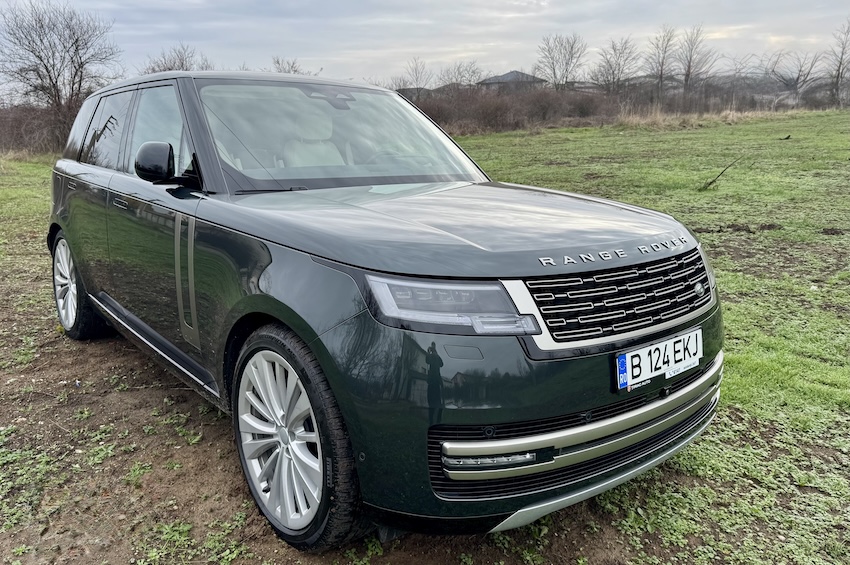
At first glance, the new Range Rover feels familiar and instantly recognizable, yet undeniably modern. This is perhaps its greatest design achievement. The designers have managed to preserve the imposing proportions and iconic silhouette while stripping away visual noise. Surfaces are cleaner, lines are fewer, and details are reduced to their essence. The result is a form of minimalism that feels intentional rather than trendy, elegant rather than provocative. It is a simplicity that conveys confidence, a trait Range Rover customers have come to expect generation after generation.
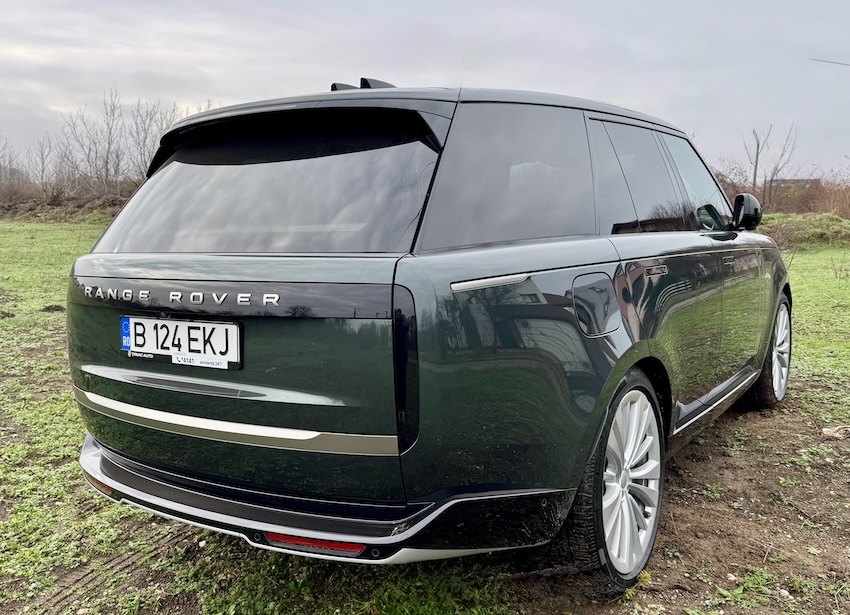
The exterior design speaks softly but carries authority. Flush door handles, refined lighting signatures, and uninterrupted body panels give the vehicle a sculptural presence. In the tested configuration, finished in an elegant british green exterior color, the effect is particularly striking. The color enhances the vehicle’s premium character without shouting for attention, aligning perfectly with the Range Rover philosophy of restrained luxury.
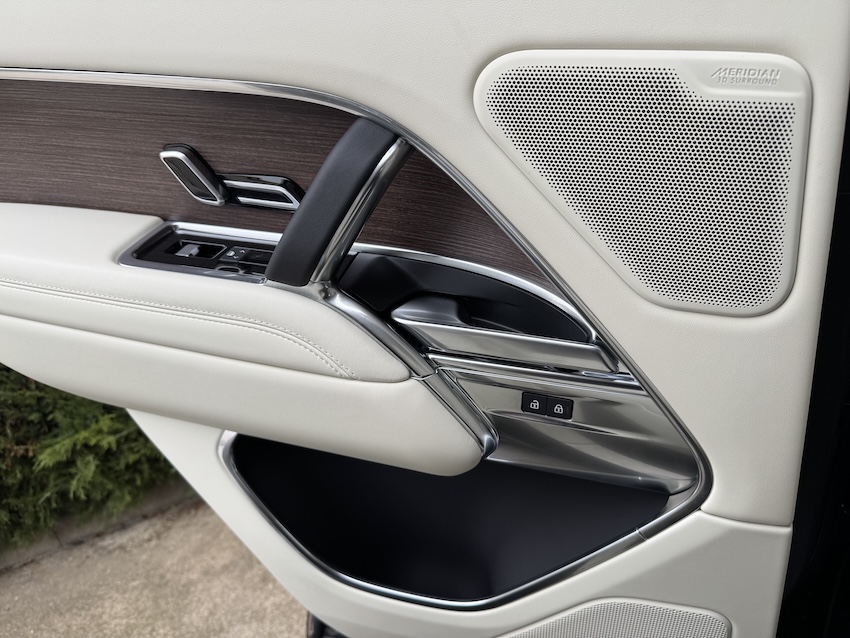
Inside, the same design language continues, though with a more nuanced balance between tradition and technology. Unlike the extreme digital minimalism adopted by other brands, Range Rover takes a more human-centric approach. The cabin is dominated by clean horizontal lines, high-quality materials, and a carefully considered mix of touchscreen interfaces and physical controls. This is not minimalism for its own sake, but minimalism in service of comfort and usability.
The interior of the tested vehicle featured an almost white, ivory-toned leather upholstery, which elevated the sense of space and light. Combined with the green exterior, the result was a refined and timeless aesthetic, one that feels more like a luxury lounge than a conventional SUV cabin. The craftsmanship is evident everywhere: from the precision of the stitching to the tactile quality of the surfaces. This is a cabin designed to impress at first glance.
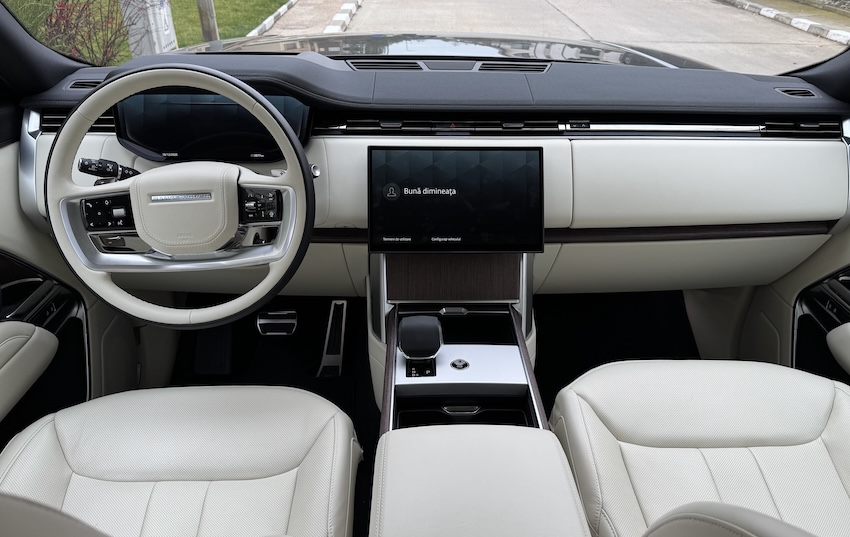
From a technological standpoint, the new Range Rover integrates modern systems seamlessly. The central touchscreen is responsive and intuitive, managing infotainment, navigation, and vehicle offroad centered settings with clarity. Importantly, Land Rover has retained physical buttons for key functions, a decision widely praised by automotive journalists. This hybrid approach ensures that technology enhances the driving experience rather than distracting from it an important consideration for business users who value efficiency and ease of use.
Behind the wheel, the Range Rover immediately conveys a sense of control and reassurance. Despite its significant size and weight, the vehicle never feels overwhelming. The squared-off design and upright driving position make it easy to intuitively judge the car’s dimensions, an aspect frequently highlighted in professional reviews. This, combined with excellent visibility and advanced driver-assistance systems, inspires confidence whether navigating tight urban streets or cruising on the motorway.
The elevated seating position is one of the defining characteristics of the Range Rover experience. From here, the driver feels not just comfortable, but commanding secure, relaxed, and well insulated from the outside world. This sense of security is further reinforced by the vehicle’s exceptional refinement. Road noise is minimal, vibrations are almost imperceptible, and the cabin remains serene even at higher speeds.
On the road, rear-wheel steering transforms the driving experience, especially at low speeds. Maneuvering through tight city streets, parking structures, or narrow driveways feels surprisingly effortless for a vehicle of this scale. At higher speeds, the system enhances stability, contributing to a composed and reassuring driving feel.
Under the hood, the 3.0-liter diesel engine proves to be an ideal match for the Range Rover’s character. While it may not appeal to performance-focused drivers seeking dramatic acceleration, it excels where it matters most: smoothness, torque delivery, and efficiency. Fuel efficiency and long-range capability further enhance the diesel’s appeal, particularly for those who spend significant time on the road. While petrol and hybrid variants are available to suit different preferences, the D350 remains a compelling choice for drivers who prioritize balance, comfort, and real-world usability. The Range Rover does not encourage aggressive driving; instead, it rewards composure and measured inputs.
Despite its luxury-focused demeanor, the Range Rover has not abandoned its roots. Off-road capability remains a core part of its identity. With impressive ground clearance, advanced terrain management systems, and a remarkable water-wading depth, the vehicle retains the ability to venture far beyond paved roads. While many owners may never test these limits, the knowledge that the capability exists adds to the vehicle’s overall sense of authority and engineering depth.
Perhaps the most remarkable aspect of the new Range Rover is how cohesively all these elements come together. Design, technology, comfort, and performance are not presented as separate features, but as parts of a unified vision. This is a vehicle designed for individuals who see luxury not as excess, but as balance.
In a market increasingly crowded with large luxury SUVs, the new Range Rover stands apart by remaining true to itself. It does not chase trends, nor does it attempt to redefine luxury. Instead, it refines an already powerful formula, delivering a product that feels mature, confident, and thoroughly modern.