Romanian-German business community calls for European Unity amid regulatory and geopolitical strain
At a time when geopolitical tension, regulatory fragmentation and technological dependence are reshaping global competition, the Romanian-German business community used its largest annual gathering to send a clear message: Europe’s economic relevance will depend on unity, coordination and trust between business and the state.
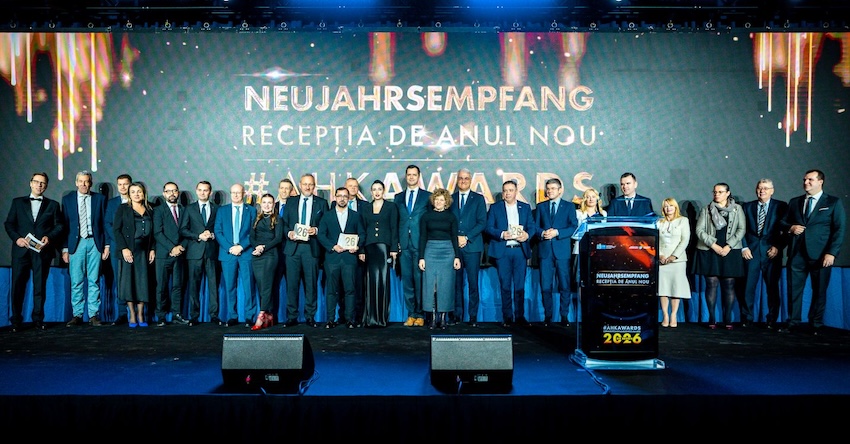
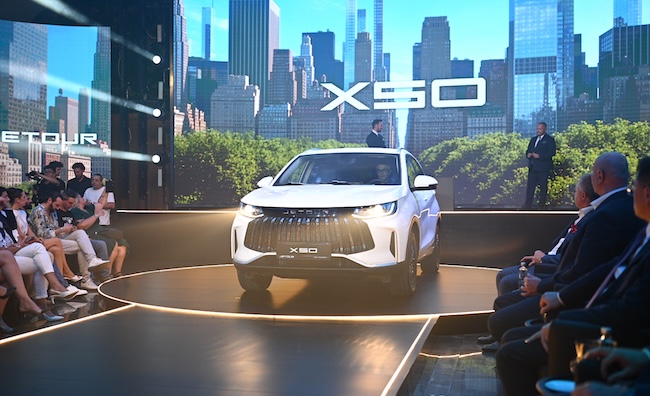
Speaking at the AHK Romania New Year’s Reception at the Palace of Parliament, attended by nearly 800 business leaders, government officials, presidential representatives, academics and civil society, Volker Raffel, President of AHK Romania, framed the stakes bluntly. Europe, he said, is at a crossroads in a rapidly changing world and, depending on the direction it takes, “will either have a seat at the table or be on the menu.”
The message resonated beyond rhetoric. It pointed to structural issues that European companies increasingly feel in day-to-day operations: fragmented technical standards, inconsistent economic policies and excessive bureaucracy that together act as a hidden barrier to competitiveness.
Raffel cited a recent estimate suggesting that the lack of European unification in technical standards and common policies amounts to a barrier equivalent to a 44% tariff—far higher than the 15% tariffs Europe often criticizes in its transatlantic trade relations. Overregulation and administrative burdens, he argued, further compound the problem by slowing economic development and innovation.
The solution, in his view, is not blame but coordination. “Less mutual reproach towards foreigners and multinationals, and more collaboration—working together and combining our strengths,” he urged.
Sebastian Metz, General Director of AHK Romania, reinforced the theme: Europe is strongest when it fully uses the Single Market, defends common values and deepens partnerships. “Only through joint action can we secure prosperity and competitiveness,” he said.
Beyond calls for unity, speakers highlighted urgent priorities for Europe’s economic architecture: the need for a genuine common financial market capable of funding emerging technologies developed within Europe, and stronger protection of intellectual property and digital content hosted largely on American online platforms.
These platforms, Raffel noted, generate significant advertising revenue from European-created content while also storing the personal data of EU citizens—raising questions about economic value capture and digital sovereignty.
Although Europe’s relative global economic weight may have shifted in recent decades, participants stressed that it remains highly relevant. Maintaining that relevance, however, requires coordinated economic policy and a business environment that encourages innovation rather than stifles it.
The event’s central theme for 2026, announced by AHK Romania member companies—“Together for a stronger Europe. Trust creates tomorrow”—reflected another key message: prosperity depends not only on markets, but on trust between companies, public institutions and society.
Romania’s Deputy Prime Minister, Oana Gheorghiu, acknowledged the tension between recent government measures and the concerns of companies and citizens. She described the current administration as one that had to take difficult and unpopular decisions in order to “clean up the house after someone left the tap running.”
Her appeal to the business community was for dialogue and shared responsibility in restoring confidence. If Romania aims to attract both foreign and domestic investment, build integrated production networks, develop research and development centers and create higher value chains, she said, then the interaction between the state and the private sector must be fundamentally reformed.
The evening also marked the third edition of the AHK Awards, which recognize excellence within the Romanian-German business ecosystem. This year’s competition attracted 161 project submissions—the highest number so far—underscoring the dynamism and maturity of the community.
In the Business Excellence category, DRÄXLMAIER Romania Sisteme Electrice was recognized for its transformation project in Satu Mare. Through investments of €59.5 million, the company increased automation levels to 80–90%, expanded its team’s technical expertise from 25 to 35 technologies and created over 400 new jobs.
Schaeffler Romania won the Our Employees, Our Success award for its “Schaeffler Kids” campaign, which used a video featuring employees’ children to communicate the company’s values and strengthen bonds with both staff and the local community.
In the Innovation and New Technologies category, Bosch Group in Romania was awarded for its “Tram Forward Assist” solution developed by Bosch Engineering. Combining radar sensors and cameras, the system monitors the area in front of trams and warns drivers of potential collisions with vehicles, pedestrians or cyclists, improving urban safety and reducing delays and repair costs.
The Responsibility for the Future award went to Tășuleasa Social Association for the Via Transilvanica project—a 1,600 km trail crossing natural landscapes and rural communities, supporting biodiversity, local development and cultural heritage.
Awards were presented by Romania’s Minister of Economy, Irineu Darău, Presidential Counselor Radu Burnete, Minister of Investments and European Projects Dragoș Pîslaru, and Head of the Prime Minister’s Chancellery Mihai Jurca.